The Unlonely Heart
Joyce Carol Oates once called Edward Hopper’s Nighthawks, “Our most poignant, ceaselessly replicated romantic image of American loneliness.” It is a specific brand of American loneliness, the atomized existence of living in the modern city – painted decades ago and still just as haunting, its cool detachment, and insistence of loneliness among others, resonate perhaps too strongly. In her beautiful meditation on art, loneliness, and cities – The Lonely City, Adventures in The Art of Being Alone — Olivia Laing writes about Hopper’s “sense of separation of being alone in a big city—determined to articulate the day-to-day experience of inhabiting the modern, electric, city of New York.”
The current loneliness epidemic, of feeling alone among others, of seeing a mirage of connections that cannot happen at every turn, is now of course exponentially larger and omnipresent. The digital and physical world seem to promise even more opportunities for intimacy, with consequent feelings of personal failure and loneliness if one is not able to harness them.
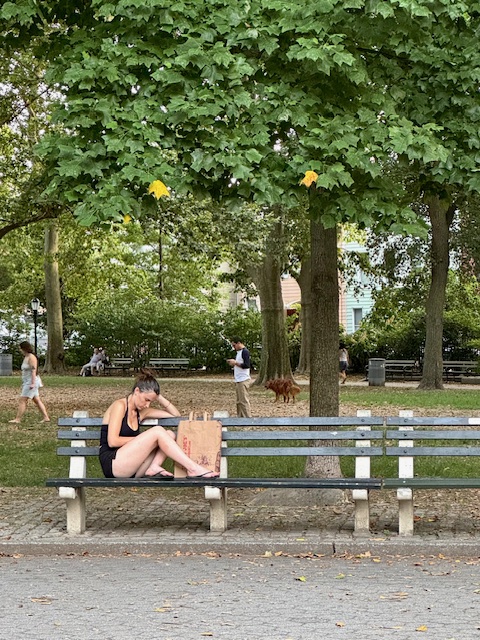
And yet, the city also holds the antidote — of feeling less alone because one is among others. Some of the city’s public spaces provide the inverse of Hopper’s tragically isolated strangers in proximity to one other. They enable those who are alone to feel less so, they provide a more permeable and activated social sphere that only makes demands on you to engage if you want to, in the way you want to.
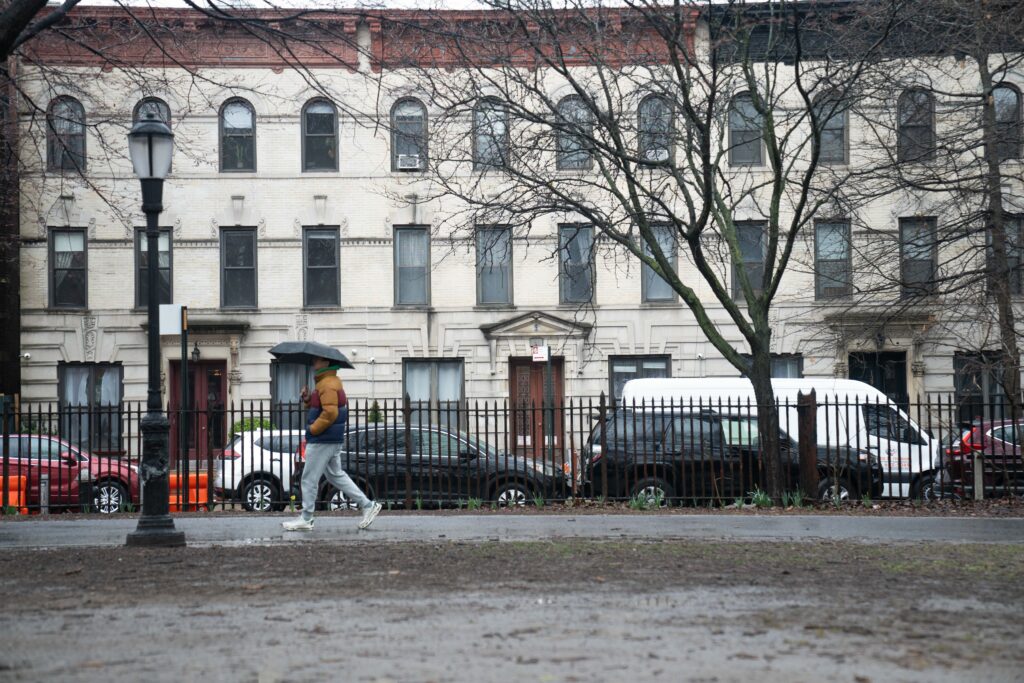
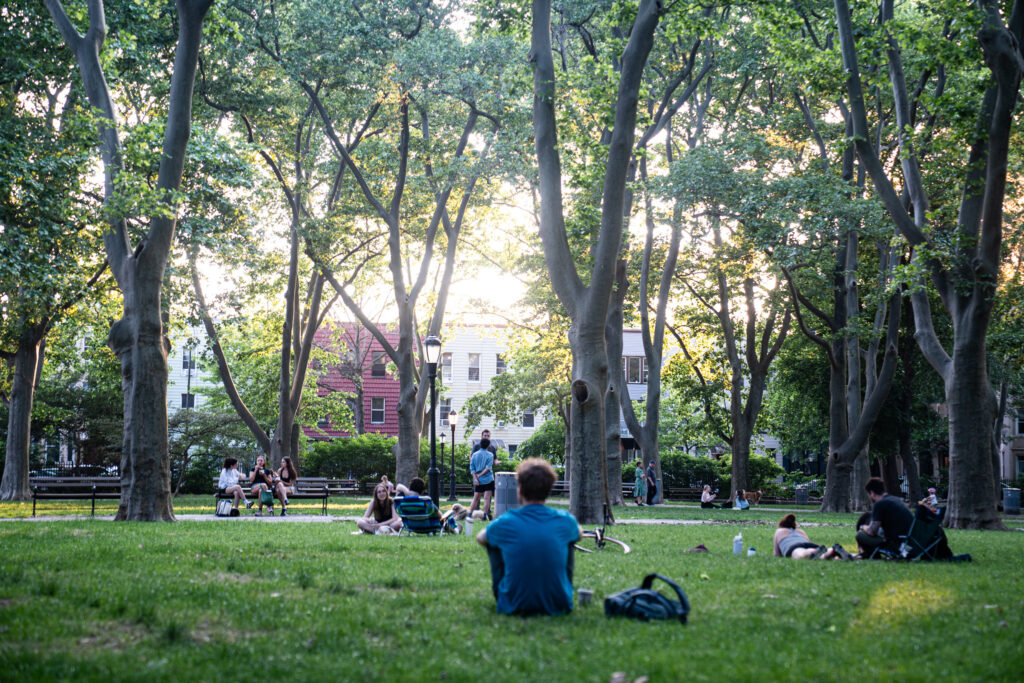
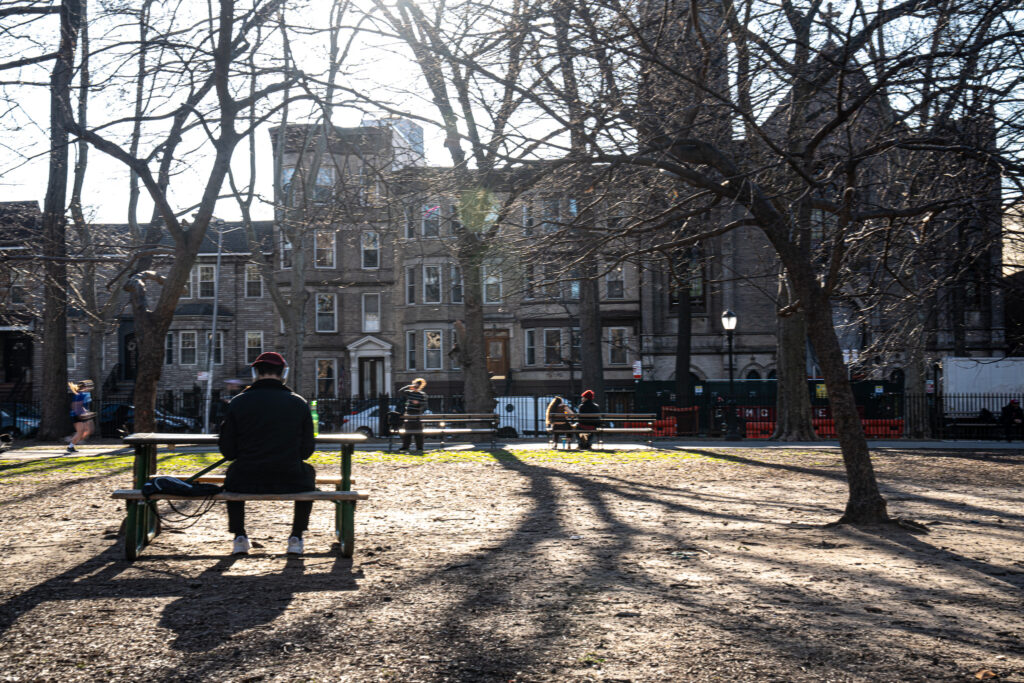
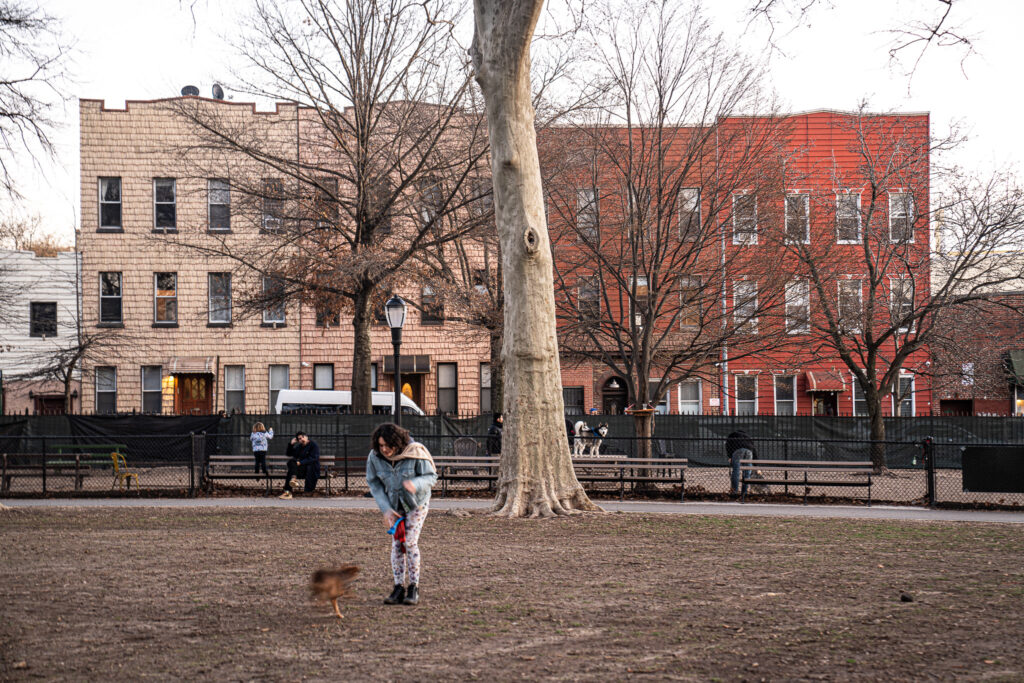
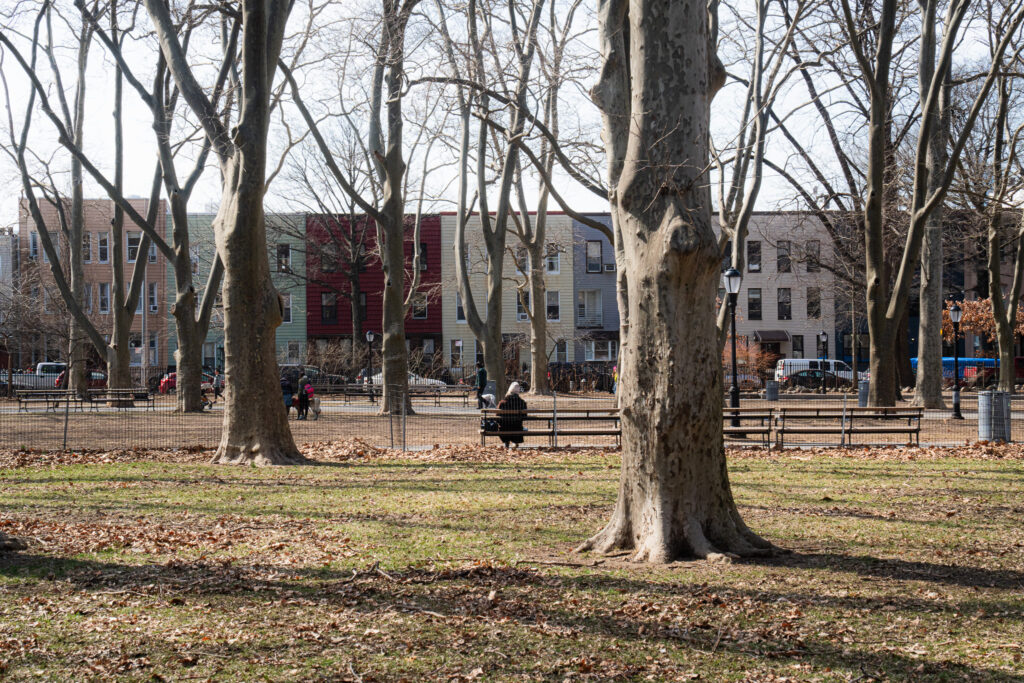
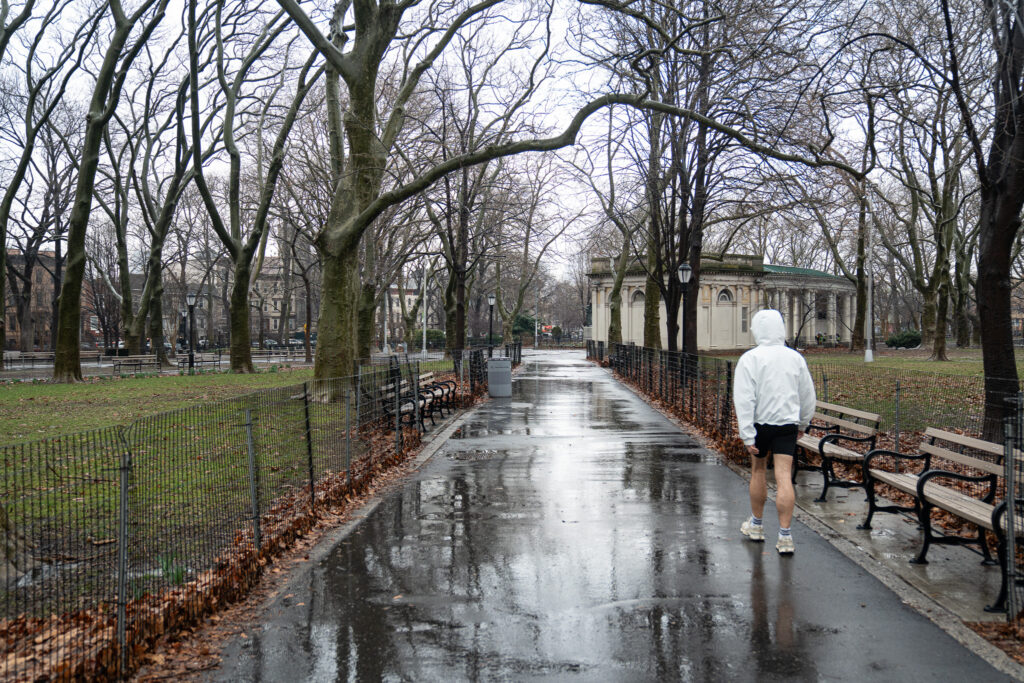
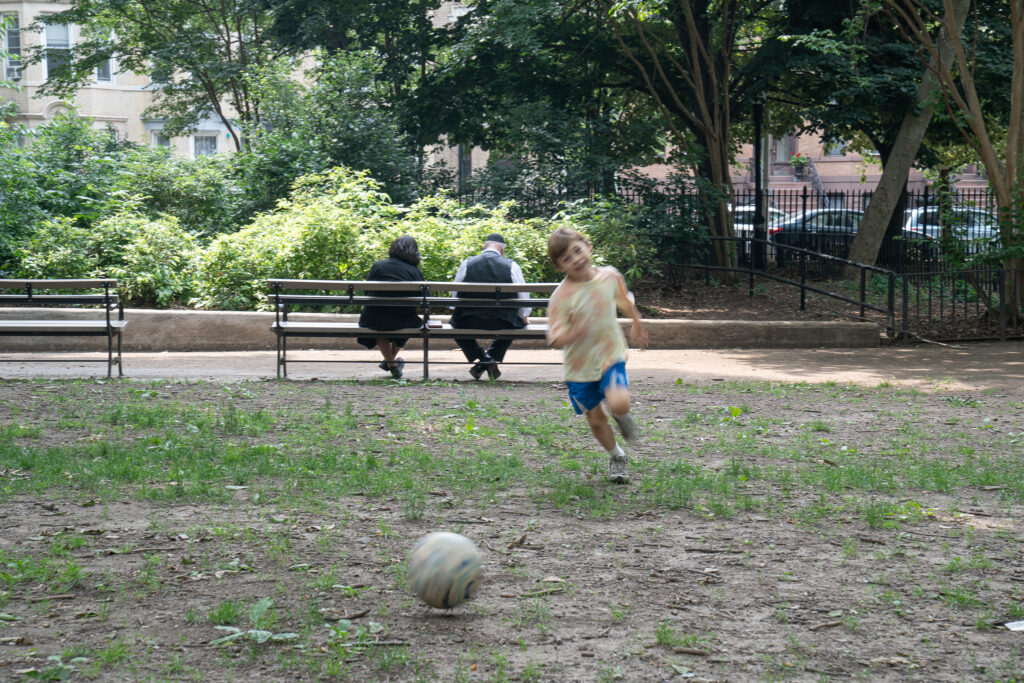
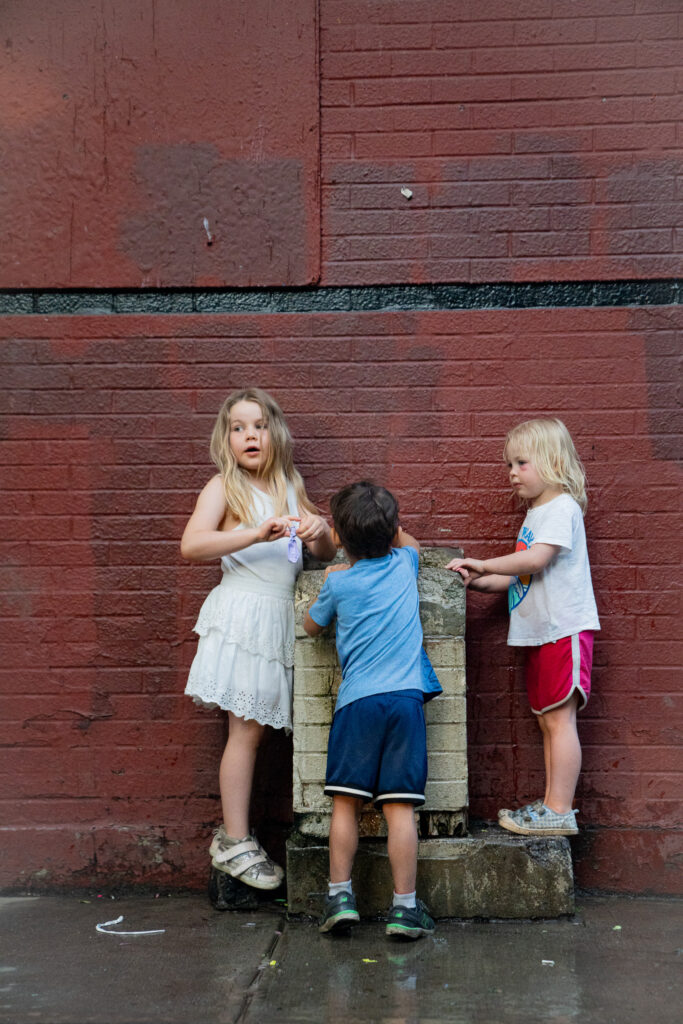
Last December, after moving to a different part of Greenpoint, Brooklyn, I began photographing what seems like a near-perfect prototype. Monsignor McGolrick Park, two blocks away from home, feels like the beating heart of a community, central to its life, pumping in and out a social life blood that reaches its users even after they are far from it. It provides exactly the kind of relief for those seeking an escape from isolation, from feeling alone in the teeming metropolis.
At just over 9 acres, the park’s edges are marked but give full view, from every point, of the buildings and world beyond – the life and tempo around it seamlessly flowing through. Its stately London plane trees tower but don’t obscure, forming a part of the neighborhood’s skyline. The town-square-like centre of the park, dating from 1910, hosts a farmer’s market on Sundays and informal games and gatherings the rest of the time – kids playing soccer or tag; new mothers finding camaraderie; parents tossing baseballs to their children or pushing them in swings; dogs and their owners crisscrossing at every angle. The benches that line its walkways, and the passive lawns between them, give one respite from the bustling world while still feeling immersed it. Unlike larger parks designed to provide an antidote to city life, McGolrick’s virtues are woven into the urban fabric. It provides a similar salutary benefit that the flaneur gains by walking the city. As Laren Elkin has written, “The flaneur, attuned to the chords that vibrate throughout his city, knows without knowing…it confers – or restores – a feeling of placeness. The geographer Yi-Fu Tuan says “A space becomes a place when through movement we invest it with meaning, when we see it as something to be perceived, apprehended experienced.” Somehow even being stationary inside this park draws on the rhythm of the flaneur to feel this sense of place, whether because of those walking around you, the cars you can hear driving by, or the hum and buzz of life continuing even if you have paused.
For all these reasons, McGolrick Park anchored me almost immediately, in my sense of the neighborhood and in my daily life. I was initially entranced by the canopy of London planes that frame everything so beautifully, but as the park’s pulse became more legible, its rhythm internalized, I turned toward the people who use it, especially the individuals who seem to find in it space to be alone and not lonely. These photos focus on them and the life around them that makes this so.
Yael Friedman
Yael Friedman is a writer and editor based in New York. She keeps her eye on the ball, swings for the fences, and exhausts all sports metaphors. She hopes to name her soon-to-be-adopted puppy Gary, after Gary Ron & Keith (the best broadcast booth in the MLB). You can find most of her published work here.