Fear and Failure in Sarajevo
There are two things I will never forget about Sarajevo. The first is how extraordinary a city it was. The second is that I have never been more scared in my life.
My first trip to Sarajevo was in December 1986 for a Luge World Cup race. It was halfway through my third season on the Canadian Luge Team. My rookie season had been as a
wide-eyed junior and my second as a quick-learning senior. I had to learn quickly because I had no other choice.
In the sport of luge, junior men start lower on track than senior men, but at the same start as the women and doubles. At the beginning of my second season, when I turned senior, the coaches suggested that I compete in doubles, partly because I had the right tall and thin build for it but also so that I could stay at the lower start and learn the European tracks more gradually. I agreed, but less than a month into that second season my doubles partner had a nasty crash and injured his neck badly during training.
Later that night when the coaches returned from the hospital, they told me that our season as a doubles team was over but that I had a choice – I could either go home or continue to slide singles but from the higher start. I dreamt of getting to the Olympics, so, I went to the top with the big boys and paid my dues. By the next season, everything was going much better because I had raced at all of the tracks – all, that is, except Sarajevo.
Sarajevo was still showing signs of glory from hosting the Winter Olympics three years previously. After travelling by bus for 24 hours from our last race in Germany, we drove briefly through the city centre and saw some of the Olympic facilities and colourful banners hanging from the light posts.
While most luge tracks are located near small ski resort towns, Sarajevo was the only track other than Calgary and Innsbruck that was near a major city. It was a refreshing change to see the hustle and bustle of a big city. Even from my seat on the bus I knew I was going to like this place. I couldn’t wait to get out and look around. But the bus headed out of town to our hotel about 10 kilometres further into the surrounding hills. The hotel was a popular spot about halfway between downtown and the luge track. The friendly and energetic staff quickly fed us and got us settled in our rooms. At last, a real bed and not a bus seat.
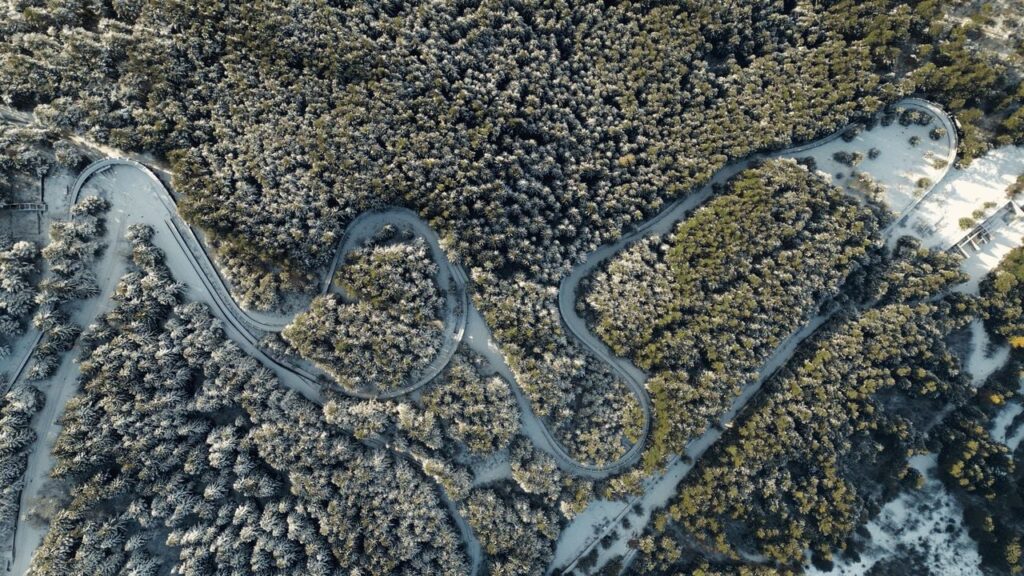
The next morning after a delicious breakfast complete with strong Turkish coffee, we bussed up the hillside road to the track. The first thing I noticed was the spectacular view we had of Sarajevo, nestled in a picturesque snow-capped mountain valley. This place was growing on me by the second.
As always, upon arriving at a new track, we walked the length of it, getting the lay of the land,
memorizing the combination of curves and getting instructions from the coaches about the best way to take each curve and approximately where to steer. It was clear this track was going to be fast, and it looked like one that I should do well on. The long straightaways and big curves were similar to our home track in Calgary. But by the time our first training runs were scheduled to start later that day, a thick fog had rolled into the valley and the session was cancelled. It was the thickest fog I had ever been in – you could barely see the end of your out-stretched arm. With many days to go before the race, the coaches suggested we go downtown, below the fog, to do some sightseeing in case we couldn’t go later on.
The bus dropped us off in the middle of the city and we quickly headed off in our own directions.
To my surprise, I turned the first corner only to realize that I was at the infamous site of the
assassination of Austro-Hungary’s Archduke Ferdinand, an act that triggered the First World War. It was sort of like stumbling through Dallas and unexpectedly being sandwiched between the Texas School Book Depository and a grassy knoll. I soaked up the information on the plaque and continued wandering down the busy streets.
In the heart of the business district, murals of Yugoslavia’s leader, General Tito, graced the sides of buildings and national flags waved proudly in classic communist style. But nearby in huge indoor marketplaces, like so many cities in Europe, farmers and locals bartered for their fresh daily produce. An old warehouse held a flea market bustling with local hustlers hawking their trinkets. Just down a side street I hooked up with some of my teammates and checked out the nearby artisan studios whose doors were bursting with objects that had a distinct Turkish flair.
As the evening darkness settled over the city, I could hear the sound of church bells ringing in the distance, but I also heard something I had never heard before – a wailing voice being cbroadcast to the neighbourhood. I turned off the main avenue to see where it was coming from. I quickly came upon its source and function, a loudspeaker high above the courtyard of a magnificent mosque calling Sarajevo’s Muslim population to prayer. I had never seen a mosque before and I had certainly never heard chanting like this, echoing off the downtown office buildings. Fascinated, I stopped outside the gates and peered in to watch the hundreds of men on their knees praying in orderly rows.
While elements of Sarajevo had a European familiarity, other elements were just the opposite. It was magnificent. It was like a crossroads of culture, making it one of the greatest cities I had ever been to. People dressed with class and cosmopolitan flair. There was something interesting around almost every corner. The abundance of diesel exhaust even gave it a distinct smell. The food was great, and the Sarajevan’s joie de vivre lasted well into the night as I lay in my bed that night listening to the dull heartbeat of the disco in the basement of our hotel.
The fog that had rolled into the valley a day earlier didn’t seem to want to leave. Our training runs were cancelled almost every day. Never having been to this track, I desperately needed to get as many training runs in before the race as possible. At least three or four, and preferably more. In the end I only got two, both starting lower on the track, which is customary so you can gradually build up to the track’s top velocity.
At the end of that second and last training run I was still having problems in the middle section of the track, flying off the ends of a few successive curves and being slammed into the adjoining walls. I was out of control. Going faster, from farther up the track, without fixing the present problems was just going to throw me harder into the walls and who knew what else. I couldn’t believe my ears when they cancelled the final training session. It left me with the emptiest feeling I have ever experienced. I was scared, mainly because in this sport of centimetres, there were about 100 metres of track I had never been on. For the first time since I started sliding, I didn’t know what lay ahead of me. It was like I was about to jump out of a plane not knowing how to open the chute.
That night I couldn’t sleep. The unfamiliarity of this city, which I loved so much a few days before, I now hated. I didn’t want to be there.
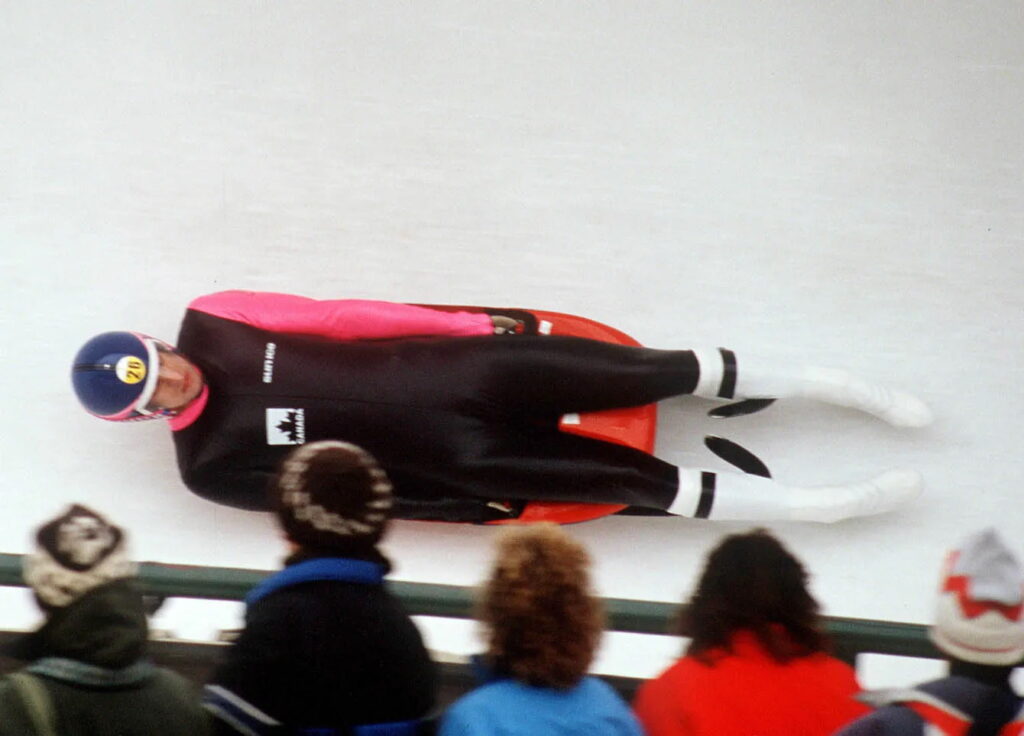
The next morning, the fog had cleared just enough for us to race, but it was by no means gone. When we got to the track, I took my sled and equipment into the start hut. I went to the top of the start ramp and looked out. I needed to visualize what I had to do in this upper and still unknown part of the track. I was hoping to be able to see the spot, a few curves further down the track, where I had started my last training run. Instead, what I saw was a wall of fog. I couldn’t see the first curve. I couldn’t even see the bottom of the steep start ramp. I had never felt as helpless and alone in my life.
After the initial anxiety attack passed, I knew I had to focus. The only way out of the situation was to take it into my own hands, and to use the skills I had to make it work.
“The track is clear for Chris Wightman from Canada,” barked the race announcer in broken English. The green light flicked on and I had 30 seconds to push off.
I wouldn’t say that my life flashed in front of my eyes, but it was one of those moments when your mind rushes so fast, you have a hundred thoughts a second. Everything was hyper-real, the ice was whiter than it had ever been, the tall pines around the track were greener than ever and my heart was beating louder than ever. And then it happened, just as it did at the beginning of every other race: the long hours of training paid off as my mind and body met and did what they were supposed to do – race.
If anything, my pull form from the start handles was stronger than normal with all of the extra anxiety and adrenaline pumping through my body. As I lay down on my sled, I improvised my way through the first few unknown curves. Then everything started looking familiar again, coming at me a little bit faster, but at least familiar. It wasn’t a perfect run, but it was better than the last and when I got off my sled at the bottom I couldn’t wait to go back to the top. Finally, it was fun again.
I learned a lot in Sarajevo. I learned a lot about myself and I realized that I was in the position I was in because I had the skills to get myself through it. I have used that experience many times since. Just because you don’t know what exactly is ahead, just believe in yourself and you’ll get through it.
I also learned about a new country, one that was different but at the same time familiar. I say familiar because Yugoslavia, at that time, was similar to Canada with several different ethnic groups living in relative peace and harmony. Sarajevo showcased it. The important lesson was that the mix of cultures made it really interesting and gave it an extra dimension. It made me stop and notice, it made me feel alive, and it left me wanting to go back.
I did go back, the next year, for another World Cup in which I did much better. Every day I couldn’t wait to finish training so I could go and explore the streets of Sarajevo. It was the only place on the tour where I really wanted to do that.
But now I don’t know if I could go back.
The luge and bobsled track is decimated, full of gaping wounds from mortar shells. During the war, its fifteen-foot-high, two-foot-thick concrete walls served as a serpentine bunker, housing deadly artillery high in the hills overlooking Sarajevo. I have heard it became, ironically, somewhat of a graveyard too. With each direct hit from enemy guns, the ammonia-filled refrigeration pipes embedded in the track exploded, releasing toxic gas on the unsuspecting sentries.
Our wonderful hotel halfway up the hill is also gone. All of the great hospitality and the heartbeat of the disco snuffed out by whatever faction claimed it as theirs.
And I’ll never forget the horror of watching television news reports about the bloody bombings on the markets in downtown Sarajevo that I loved so much. Innocent people gathering food for their day, blown up by the cowardly guns on the surrounding hills.
I often think of all the people I met in Sarajevo who were so glad to have international athletes in town. The artisans, the shopkeepers, and our waiter who made us laugh every day.
I know the fear I felt during that race was nothing compared to the horror Sarajevans went through day in and day out for almost four years.
I wonder how they made out during the war; I wonder if they are alive or dead. I am so glad that I saw Sarajevo when I did. After all the Olympic crowds had left and before all the hatred took over.
I wonder if Sarajevo will ever be like that again.
Reprinted by permission of McClelland & Stewart from Heroes in Our Midst.
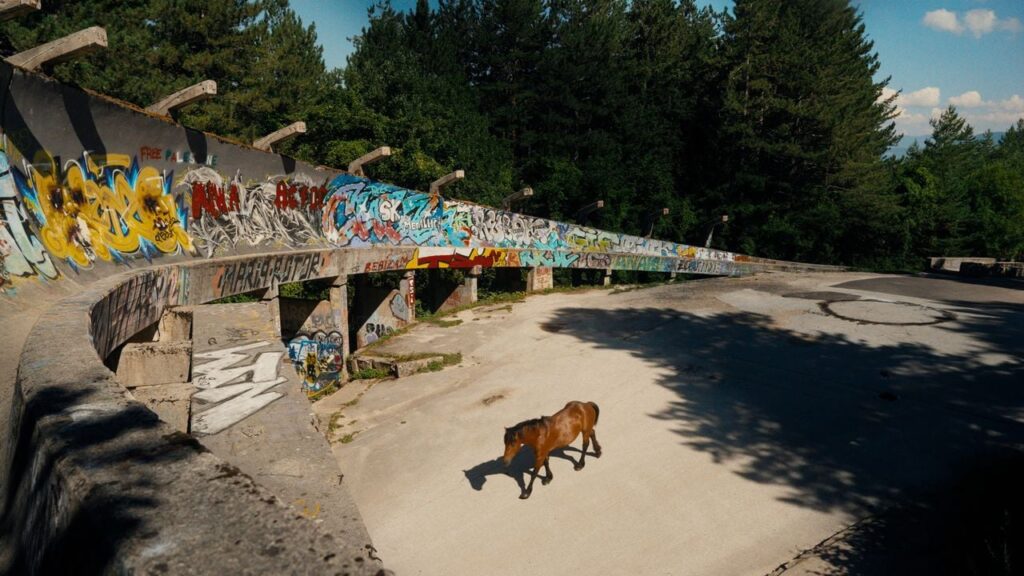
Update: November 2025 — I wrote this piece twenty-five years ago, and it first appeared in Heroes in Our Midst (2001), a compendium of short stories celebrating Canadian athletes’ experiences. To be honest, I haven’t thought about it much since. At the time, it served as both an homage and a eulogy to post-war Sarajevo and the Trebević track—places still very raw in my memory back then.
Revisiting it now, I can see that the lessons I drew from that experience—lessons about fear, failure, and the willfulness required to push through both—have stayed with me. They’ve shaped how I live and work, and how I’ve tried to mentor my own children and the young athletes I’ve coached over the years.
What didn’t get addressed over the decades were the questions I still carried about Sarajevo and that track. They lingered only because I never went looking for answers. Not, that is, until a few months ago, when I crossed paths with Ryan Sidhoo, an award-winning documentary filmmaker from Vancouver. His remarkable new film, The Track, answered all of them—and then some.
Watching Sidhoo’s film, I felt as if my original story was kind of a prologue, or at least a companion piece, to his. The Track follows three Bosnian friends chasing an improbable Olympic dream in post-war Sarajevo, training on the same, albeit now bullet-scarred, luge track that once shaped my own journey. But the film widens its lens: it captures the arduous path a nation faces in recovering and rebuilding after a siege, and explores where a generation turns after conflict in a society whose institutions have been strained by years of political complexity, uneven reconstruction, and the long shadow of war.
If this story resonates with you, I urge you to seek out a screening of The Track—online or in a theatre. It’s a film that not only illuminates the past I once wrote about, but also reveals the resilience still unfolding there today. – CW
Theatre screenings this month include:
Toronto at Hot Docs Cinema
20% off promo code for readers: HDCxTRACK
January 24
Vancouver at VIFF Centre
January 16, 17, 18, 20
NYC at DCTV Firehouse Cinema
January 21
London, UK at Bertha Dochouse
January 22
Canmore, AB at artsplace Canmore
January 28
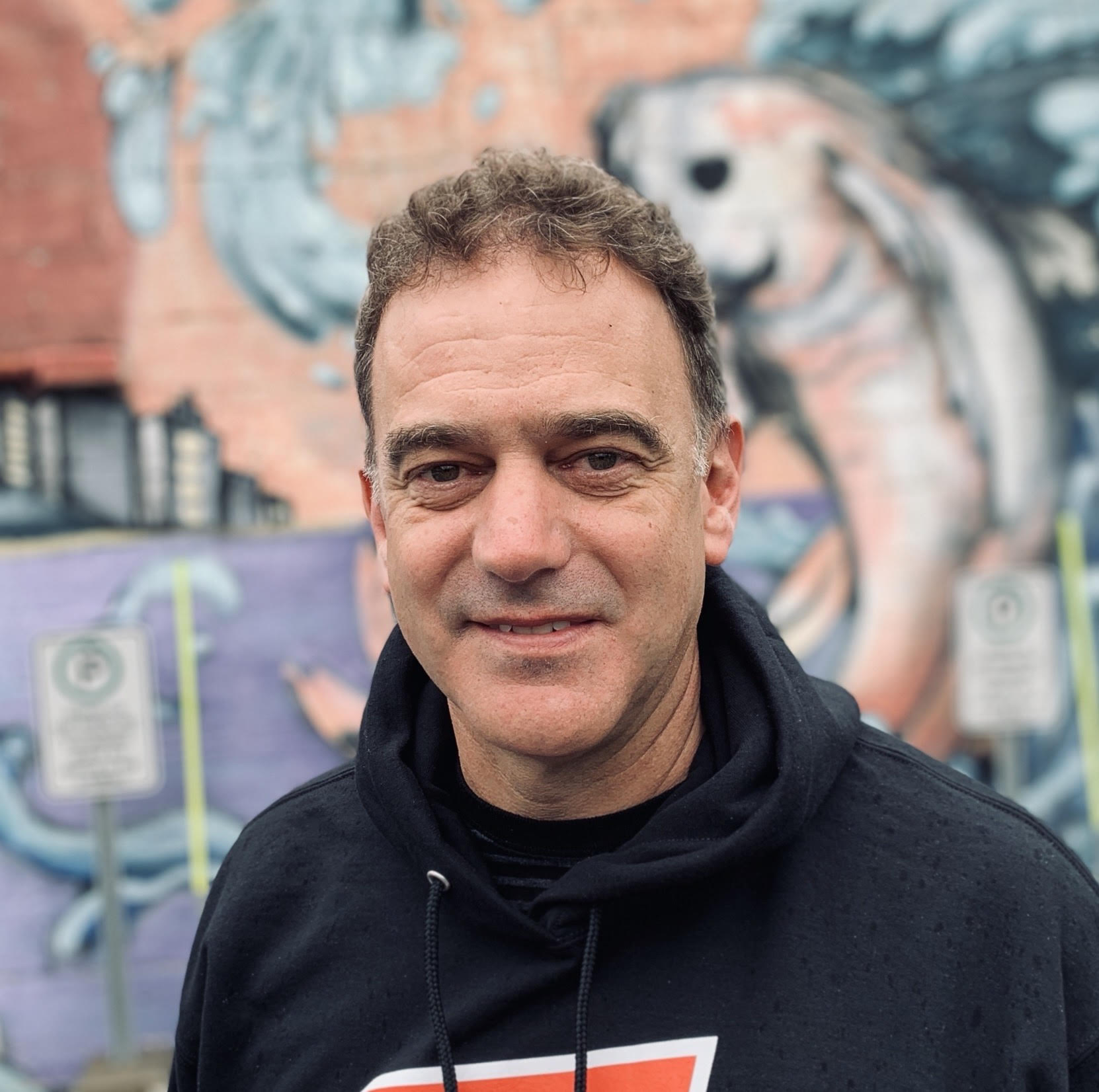
Chris Wightman
Chris Wightman competed for Canada’s Luge Team at the 1988 Olympic Winter Games in Calgary, the 1987 World Championships in Innsbruck, as well as dozens of World Cup races, including two on the Trebević track in Sarajevo.