The Crashed Kite
At about the age of 12, I became enamored with kites, having seen other kids fly them at the local park where I grew up in the Willowdale suburb of Toronto.
That local park had one remaining willow tree, a playground, a water fountain, and plenty of open space, all fixtures of my 1970s middle-class childhood.
I’d seen the type of colourful plastic kite that I wanted at a hobby store and excitedly issued to my parents a request to have one.
My mother referred the matter to my father, whose immediate reaction threw cold water on the notion.
“How much does the kite cost?”, he asked, dismissively.
I told him that it was probably about $35.
With that, the discussion ended. His silence and body language had conveyed that it was outlandish or selfish for me to want a kite for that amount of money. For the first time in my young life, I knew the taste of shame.
I was old enough now, it seemed, to be schooled in my father’s principled frugality. He was proud of having come from simple roots in rural Guyana. He called himself a country boy, claimed to need few material things to be happy, and occasionally announced that when it came to food, his was a “peasant palate,” one that actually preferred non-extravagant flavours.
All of which helps to explain my father’s response to the kite request, although at the time I was too young to understand this. I’d been chastised and it hurt. It wasn’t so much that the request had been denied, it was that I’d been made to feel bad for having made it.
Even at that young age, I was already very sensitive to feeling judged.
A few weeks later, the energy had shifted in the house.
I was directed downstairs to my father’s small workshop area where I discovered him in the midst of building me a kite.
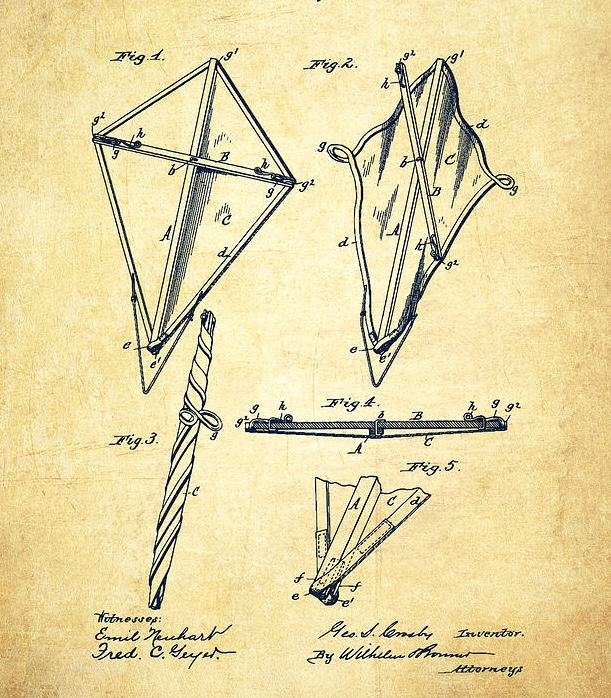
He had purchased the materials to make a simple one himself: thin lengths of balsa wood, glue, and tissue paper coloured pink and purple. He was a crafty and highly creative man, proud of a do-it-yourself ethos that he used to build a highly successful career in West Indian music.
The finished kite was nothing like the kind that I’d prized but even to my young eyes it had an inherent and delicate beauty. It was diamond-shaped, like a traditional kite, and finely assembled.
I was very happy to receive the kite but not overjoyed. Part of me knew that in creating it, my father was at once giving a gift and a life lesson.
A few days later, it was time for the kite to fly.
Together with my friend Noel from across the street, I walked down to the local park in suitably windy conditions.
Noel agreed to throw the kite into the wind while I held the line.
The first attempt was a dud. The pink-and-purple diamond pitched sharply left and right, briefly, then came abruptly down, with a thud.
The second and third attempts were no better. Noel threw the kite with all of his might but it bucked like a bronco and would not stay aloft. There was plenty of wind; that kite simply did not want to fly.
After several more failures to launch, the crashing kite remained intact but my frustration grew. Noel would gamely race over to it and heave it skyward, each time in vain.
And then, something in me gave out, gave up, was overcome.
I charged forward and outraced Noel to where the kite had landed, but instead of picking it up, I kicked it as hard as I could.
Part of the thin balsa wood frame broke immediately, but I was not satisfied. I spun around and kicked the kite again, and again, and again, stamping on it and smashing it to bits, letting out a grunt with each blow.
“What are you doing?” cried Noel, amazed that without explanation I would destroy something that my father had crafted for me by hand.
“You’re crazy,” he said, as we gazed at the shredded remains of the thing.
I said little, maybe nothing, and we walked home separately, the kite coldly left behind, scattered and abandoned.
_ _ _ _ _
It wasn’t until the next day that I had to report what had happened to my father.
The kite had not returned home and he needed an explanation.
Burning now with another kind of shame, I choked out a flimsy lie, claiming that after several failed attempts at flight, the kite had crashed hard and broken. It was so broken, in fact, that I’d simply left it there in the park.
There was no visible anger from my father. He quietly insisted that I go back to the park and bring back the broken kite.
This time, Noel did not accompany. It was a lonely, solo journey.
Overnight, several of the kite fragments had blown away. I collected what I could, and returned with just the few, sad pieces of the once-beautiful thing.
My insides burned with regret and other emotions too entangled to know.
When I showed my father what was left of his handiwork, he looked at it briefly, said nothing, and slowly walked away.
And that was the end of it.
The kite, and my ruthless destruction of it, were never spoken of again.
_ _ _ _ _
Years later, in my late teens, after my parents had divorced, I visited my father and his new family at their home in Grand Cayman. The property had a little bit of open land, on which my father proudly grew mango trees.
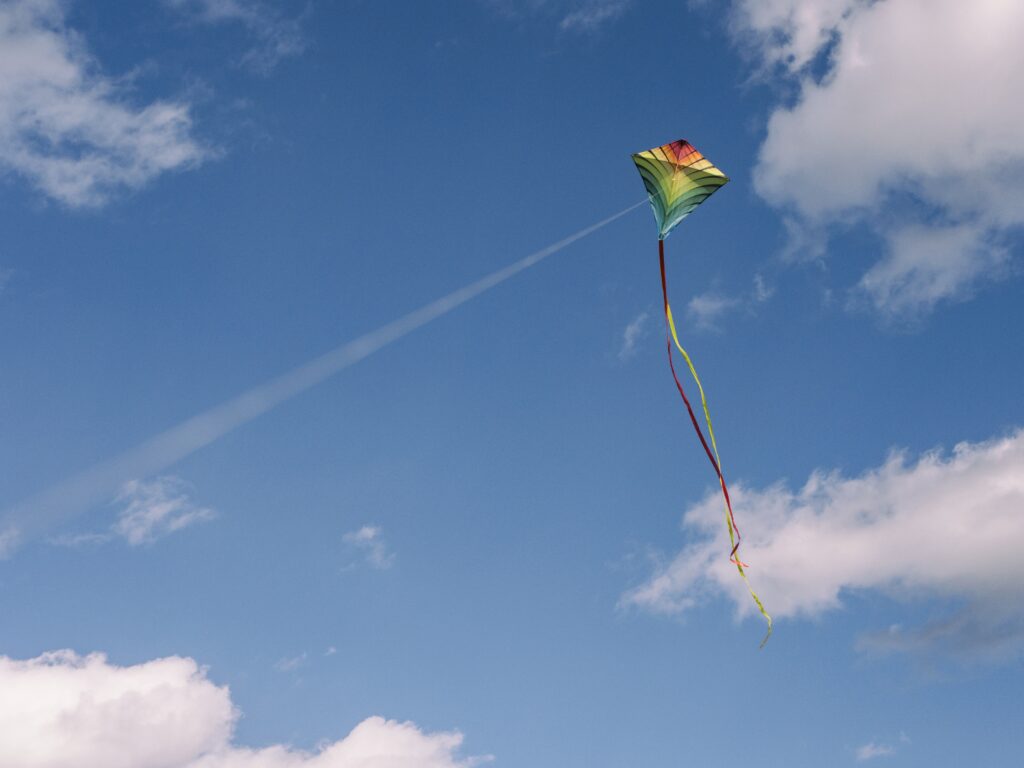
During the visit, I’d acquired a kite, shaped like a hang glider, and flew it into the great azure skies above the house.
On the day before the visit’s end, I took the kite out again, and this time pushed it to the limit, releasing all the line so that the kite became a tiny thing, maybe 50 metres up, swaying gently in the steady tropical wind, with a bird’s freedom.
The light was fading, but rather than reel it in, I tied the kite’s line firmly to the top of a fence post and let it be.
The next morning, as we loaded up to drive to the airport, the kite was still aloft –and I was told that it remained that way for many more days, maybe weeks.
Eventually, one morning, my father noticed that the line had snapped at last and the kite had been released.
Where it fell to Earth will forever remain a mystery.

Tony Martins
Tony Martins is a writer, singer, songwriter, single dad, dog owner, wobbly hockey player, and lover of chicken parm living in the beloved Aylmer sector of Gatineau, Quebec.