
Sherry McPhail
Ottawa, Ontario, Canada
The abandonment of a flower
There’s a wild plant in the forests around my city that scientists think might be missing her pollinator. She’s alone in this big world.
What do I mean by “her” pollinator? Can’t all pollinators pollinate anything?
It’s true, bees, butterflies, flies, wasps, ants can all bumble around and spread pollen like glitter-coated toddlers. But some plants have their own specialized pollen movers. They’ve evolved together and have shaped their lives to each other. Their flowers depend on specific types of bugs or birds or mammals to deliver their pollen exclusively to other plants of their species. In return, these stationary plants offer those mobile creatures the food they need to live.
Spring beauty miner bees, for example, build themselves and their young on the pollen of spring beauty flowers around the start of the growing season. If you head to the forests of Eastern Canada in early May, you can find them stuffing the Barbie-pink powder into their hind leg pouches (adorably called corbicula) and flying home happier and heavier to feed the kids.
When you grow that kind of intimate partnership with another species over eons, it must be confusing and devastating when it’s over. This might be the case with wild ginger.
The flowers of wild ginger (Asarum canadense) are as big as your baby toe, cup-shaped and blood red. The flowers stay close to the ground, coyly flounced back in invitation, while also peeking out from below the plant’s wide leaves, in a perfect “now you see me, now you don’t” tease. It’s hard for a human to spot them without kneeling down before them. The worship seems fitting.
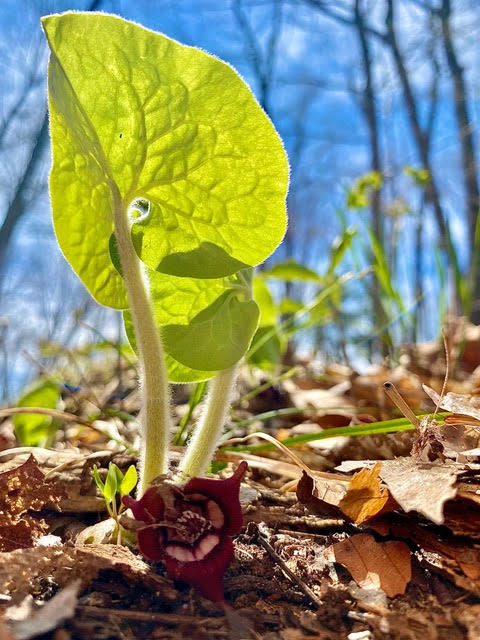
You might think these flowers are courting carrion-loving flies to get that pollination happening, like many low-growing, scarlet flowers. But those who study wild ginger for a living (my next career) have found no evidence for this. The flowers aren’t even very smelly. Some theorize that wild ginger’s partner pollinator has moved, or worse: disappeared from the earth forever.
Is it anthropomorphism to wonder if the plant feels the raw loneliness of the end of something?
Luckily, late in the flowering season, wild ginger takes care of business by standing up their stamens to get their own pollen to the stigma. Yes, these sisters can do it for themselves. About 80% of wild ginger flowers are self-pollinated, after which they grow clone seeds sown by protein-seeking ants, all without the benefit of the sexual reproduction so necessary for genetic variation and evolution. Also luckily, they benefit from rhizomes that creep underground and expand the sisterhood.
Nearby, a different plant has found a new way of feeding itself. Bugs get caught in Jack-in-the-Pulpit’s pitcher-like flower and dissolve. Some scientists think this innocent is evolving to take advantage of that extra food, becoming a meat-eater like the pitcher plant.
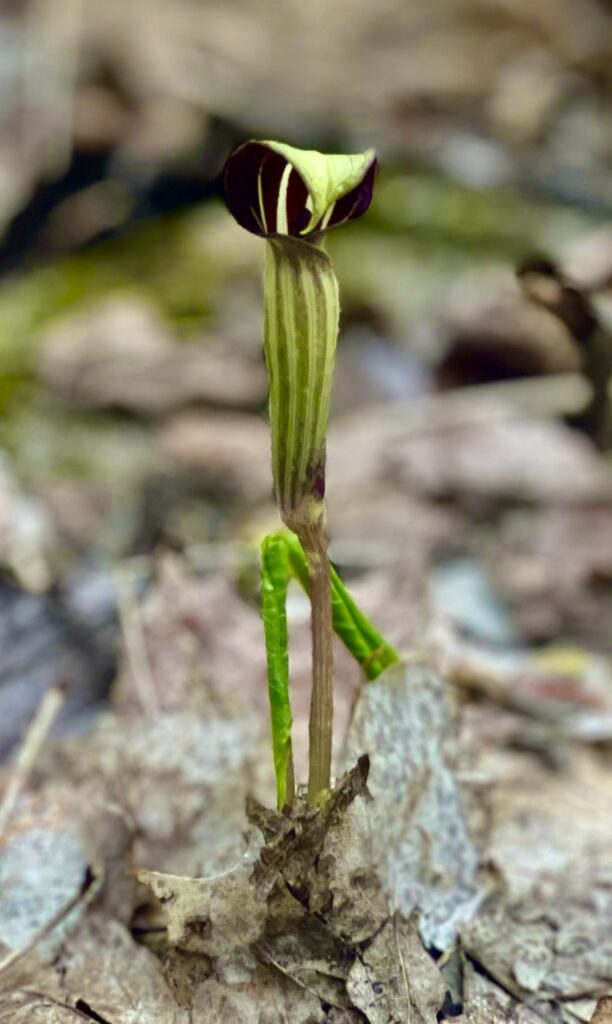
Evolution is happening before our eyes. Sometimes it’s a murder mystery. Sometimes it’s a love story. Sometimes it’s a tragedy.
 Sherry McPhail
 Sherry McPhail
Sherry McPhail is an Ottawa-based freelance writer, nature-admirer, familywoman and delusional optimist, more of whose stuff you can read at sherrymcphail.ca.